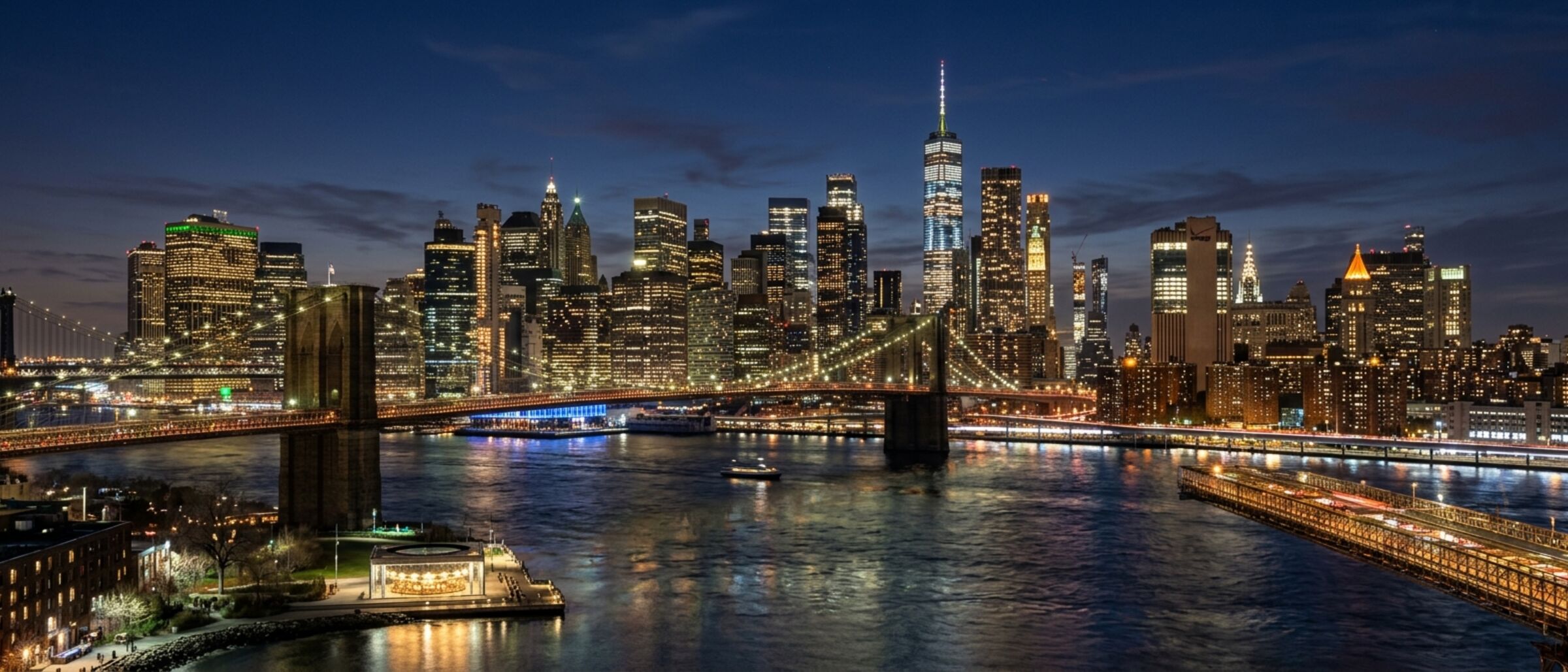
New York is where the works we lend against are priced. The city hosts the salerooms that set global benchmarks, the statutes that govern security interests, and a mature art-finance market — the practical inputs to any credible loan against a picture or a sculpture.
Sotheby's keeps its global headquarters in Manhattan, historically at 1334 York Avenue, and in 2025 moved its New York flagship into the Breuer Building on Museum Mile at 945 Madison Avenue. Christie's runs its New York house at 20 Rockefeller Plaza. Between them, and Phillips, the marquee postwar and contemporary evening auctions in May 2024 raised USD 937.3 million — 22% below 2023 and 55% below 2022. Those totals matter to a lender because they show where the comparable-sale record sits and how quickly it can move. A loan sized against last cycle's peak is a loan mispriced.
If your work sits in this end of the market, our blue-chip and post-war and contemporary pages set out how we read those results against a specific consignment.
A loan secured by a painting is a secured transaction. New York adopted Article 9 of the Uniform Commercial Code — the law governing security interests in personal property — in 1962, and non-real-estate financing statements are filed with the New York Department of State. That filing is how a lender perfects its interest in your work while it remains collateral.
There is a separate, older regime worth understanding. Under General Business Law Article 5, collateral loan brokers — pawnbrokers — operating in New York City must be licensed by the Department of Consumer and Worker Protection, a requirement whose antecedents were first enacted in 1909. Applicants post a $10,000 surety bond and file with the DCWP Licensing Center at 42 Broadway. That statute also caps a licensed collateral loan broker's charge at 4% per month. This ceiling applies to that specific regulated category; it is not a rate we quote and not an indication of terms on any facility arranged here.
The case for a loan against art, rather than a sale, is often about tax and timing. A sale of collectibles can carry capital gains tax of up to 28%, so borrowing against a work lets an owner raise cash without triggering that liability. Sales tax cuts the same way: purchases in New York City are subject to the combined 8.875% rate, though artwork bought in NYC for shipment to another state or country is not subject to local sales tax — a point that shapes how and where collectors transact.
The market this sits within is substantial. Deloitte's Art & Finance Report estimated outstanding loans against art at between USD 29.2 billion and USD 34.1 billion at the end of 2023, with the figure projected to approach USD 40 billion in 2025. The auction houses are a distinct segment of it: Sotheby's Financial Services has grown its loan book to roughly USD 1.6 billion, doubling since 2021, and in April 2024 raised USD 700 million through its first art-backed debt security, the Sotheby's ArtFi Master Trust, Series 2024-1. Those are the reference points against which an independent desk is measured.
We are a lending desk, not an auction house. That means we are indifferent to whether you eventually sell; our interest is a clean title, a defensible valuation, and a loan structured to be repaid. Provenance and attribution are settled before terms are discussed — see authentication — and the mechanics of appraisal, custody and drawdown are set out under how it works.
Loan-to-value on fine art varies by artist, medium, condition and the depth of the recent sale record, and sources cite anything from around 50% to higher figures for the strongest names. We treat LTV as a range decided case by case, never a headline number, and never a figure promised before we have seen the work.
Loans are originated by licensed lender partners. Every figure on this page — market sizes, tax rates, statutory caps and auction totals — is drawn from published sources for general guidance and background; none of it is a loan offer, a valuation, or a commitment to lend. Approval, amount and pricing depend on the individual work, your circumstances and the originating lender's underwriting. Our full disclosures explain the terms on which we operate.
Loans are originated by licensed lender partners. Loan offers, terms, rates and final decisions are made by the originating licensed lender at appraisal — figures shown here are general guidance, not loan offers.
Last reviewed August 6, 2026.
We use cookies for essential site functionality. With your consent, we also use analytics and advertising cookies to improve our service. Learn more.